


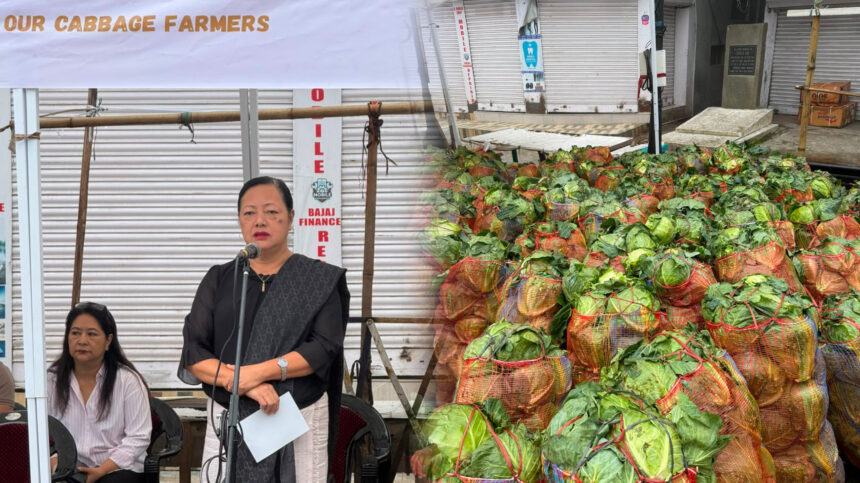
Kohima, July 16: A charity sale aimed at supporting cabbage farmers from the Razeba Range was launched on Wednesday at Old NST Junction and Post Office Junction in Kohima, offering much-needed relief to growers who have been struggling with unsold produce and financial losses.
The initiative, organised by The Entrepreneurs Associates (tEA), was inaugurated by Nagaland Minister for Horticulture and Women Resource Development, Salhoutuonuo Kruse. The campaign seeks to connect farmers directly with consumers, enabling them to sell fresh cabbages while reducing post-harvest losses.
The organisers appealed to the public to support local farmers by purchasing locally grown vegetables and standing in solidarity with the farming community during a difficult period.
However, the situation also raises broader concerns about the challenges faced by farmers in accessing markets. Despite producing fresh vegetables, many growers continue to struggle to find buyers, forcing them to depend on charity-driven initiatives for relief.
The issue prompts several important questions. Is the problem linked to inadequate market infrastructure, the absence of organised procurement systems, poor transportation and storage facilities, or increasing competition from vegetables imported from outside the state? Are consumers sufficiently encouraged to prioritise locally grown produce, and are farmers receiving the market support they need?
While charity sales provide immediate assistance, they cannot replace long-term solutions. Strengthening market linkages, establishing reliable procurement mechanisms, improving cold storage and transportation facilities, and promoting the consumption of locally produced vegetables could help ensure farmers receive fair prices for their produce and reduce the risk of crops going to waste.
As agriculture remains a primary source of livelihood for many families in Nagaland, the plight of the Razeba cabbage farmers serves as a reminder of the urgent need for sustainable policies that protect farmers’ incomes and strengthen the state’s agricultural economy.